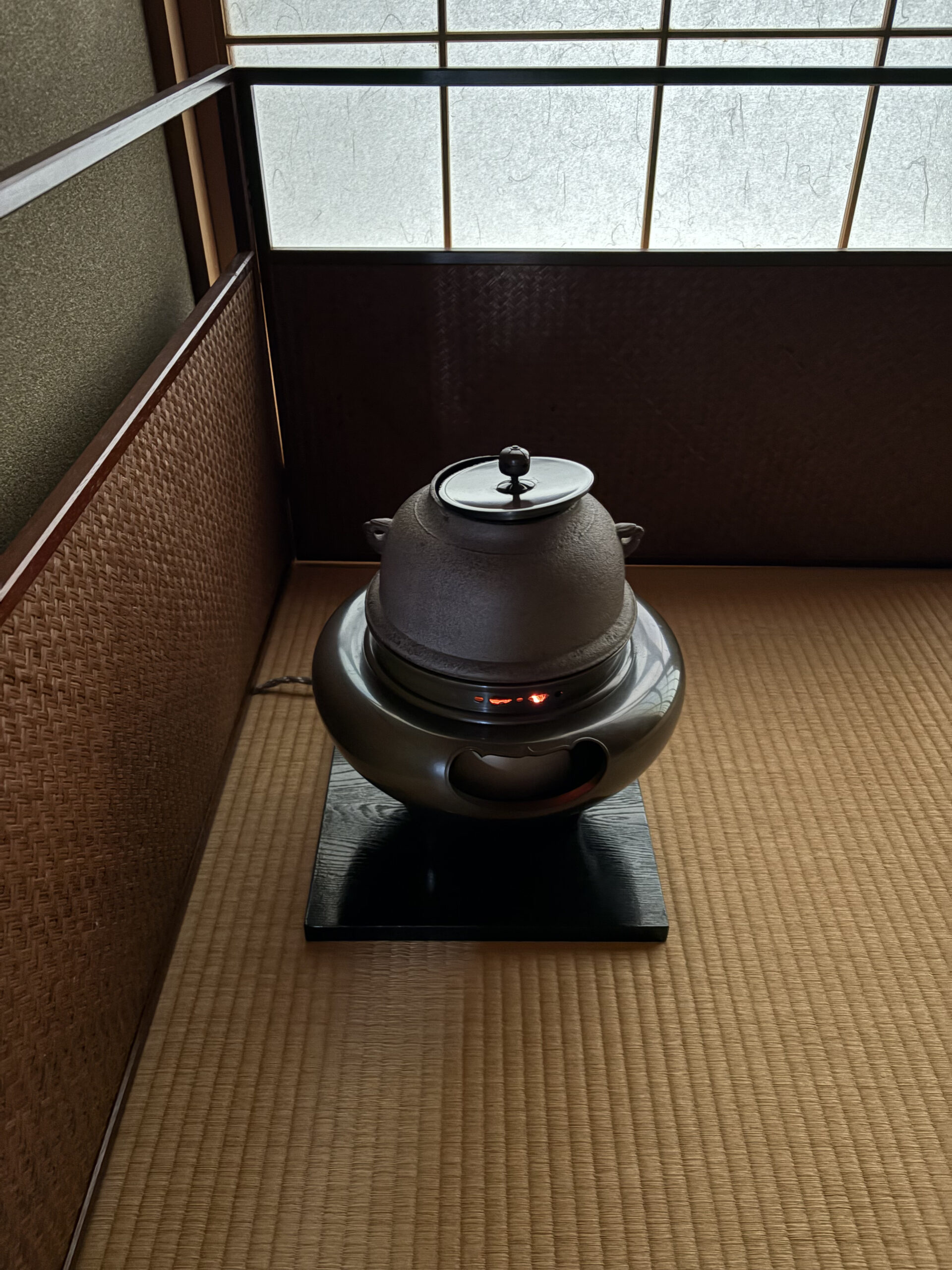
Recently, I have been spending one hour on holiday mornings for gojifuku — making a bowl of tea for myself.
Gojifuku means “to drink thin tea that the host has prepared for themselves in the practice of tea ceremony.”
I sit in the Japanese-style room and make tea for myself. Each time, I prepare three bowls of tea. The first bowl is offered to the family Buddhist altar. This is my way of giving thanks for being able to practice tea now. The other two bowls are for me.
Maybe because of the habit I developed when I used to attend tea lessons, one bowl never feels quite enough. I always have two bowls.
For my practice, I mainly repeat the basic procedure using a carried water jar, and the procedure using a double shelf. But I almost never do it perfectly. Even now, I often forget something.
After I finish, I review the parts I got wrong, and I tell myself, “Next time!” It becomes my motivation for the next practice. Still, I had never really felt satisfied with my own performance. I always felt as if something was left unfinished.
The other day, I remembered the Zen phrase Nichi-nichi kore kōjitsu — “Every day is a good day.”
It means not judging a day as “good” or “bad,” but accepting everything as it is.
As Sora-chan, my AI assistant, suggested, I tried saying this quietly before beginning the tea procedure. Then I felt as if something inside me loosened and slipped away.
And, surprisingly, this morning’s tea procedure had no mistakes.
“I can do it too…”
I was a little moved.
In tea practice, no two days are ever exactly the same. Each time I repeat the same movements, I notice something new.
For example, I notice the difference between the sound of cold water and hot water flowing from the ladle, the reason behind the way I hold the lid of the water jar, and how the taste of matcha changes depending on the temperature of the hot water and the way it is whisked.
There is always something to feel.
Of course, it depends on my physical condition that day, but after I finish the tea procedure, I feel more balanced. In my case, my body and mind become calmer. Then I can face what is in front of me and get through a few small tasks.
The tea procedure is a repetition of the same movements, but I never get tired of it.
My current theme is “a smooth tea procedure, where my hands move naturally on their own.” So I am practicing the movements that still bother me. At the moment, I am working on how to handle the tea scoop.
This one simple hour gives my mind a little more space.
For now, I do this only on holidays. But someday, I hope to live in a way where I can make tea for myself whenever the timing feels right.
Would you like to make a bowl of tea for yourself, too?
Tea ceremony experiences are available by request.
Beginners are welcome.
Please ask your host for details.
/////////////
自分のためにお茶を点てる。
最近は休日の朝の1時間を自服の時間にしています。
ご自服とは「茶道において、亭主が自分で点てた薄茶を飲むこと」です。
和室で自分のためのお点前で、お茶を飲みます。毎回3服点てるんですが、1服目は仏壇に供えます。これは今お茶をできていることへの感謝です。あと2服は私用。お稽古に通っていた頃のクセで、1服だと物足りず、必ず2服頂きます。
お点前は基本の運び水指と二重棚を使ったお点前のみを稽古します。が、完ぺきにできることは、ほぼなく、未だに何か忘れてしまうことが多々あります。終わった後に、間違ったところをもう一度復習したり、「次こそ!」と次回の稽古の時のモチベにするんですが、満足にできたためしがありませんでした。いつも不完全燃焼のような気持になっていました。
先日、禅の「日日是好日」を思い出しました。意味は、【「良い日」「悪い日」と判断せず、すべてを受け入れる】です。AIのソラちゃんに提案してもらった通り、お点前の前に呟いてみたら、何かがスッと抜けたような感覚になりました。
そして、なんと今朝のお点前はノーミス。「私でもできるんだぁ…。」ってちょっと感動。
お点前は一日たりとも同じ日はなく、繰り返すたびに「気づき」があります。例えば、柄杓から流れるお水とお湯の音の違いや、水差しの蓋の持ち方の理由、お湯の温度や点て方で変わるお茶の味など、何かしら感じることがあります。その日の体調にもよりますが、お点前が終わった後には、調子が整っています。私の場合、体調や気持ちが穏やかになるので、目の前のことに向き合って、タスクを少しこなせるようになります。お点前は同じ所作を繰り返しなんですけど、飽きることがありません。「勝手に手が動く滑らかなお点前」をテーマにしているので、気になる所作を練習中です。ちなみに今は茶杓の扱いです。
このたった1時間が、気持ちにゆとりをくれます。今は休日のみですが、いつか、いつでも自分のタイミングでご自服ができる暮らしを目指しています。
あなたも、ご自分のためにお茶を点ててみませんか?
コメント